What is a Bard Name Generator?
Creating the perfect bard name isn't just about picking something that sounds cool — it's about capturing personality, music, and storytelling in a single name. Whether you're building a character for a fantasy novel, a roleplaying game, or just having fun, a bard name generator makes the process fast, creative, and surprisingly addictive.
Bards are known for their charm, wit, and artistic flair, so their names should feel just as expressive. In fact, bard names often reflect musical talent, charisma, or even personal legends tied to the character's story.
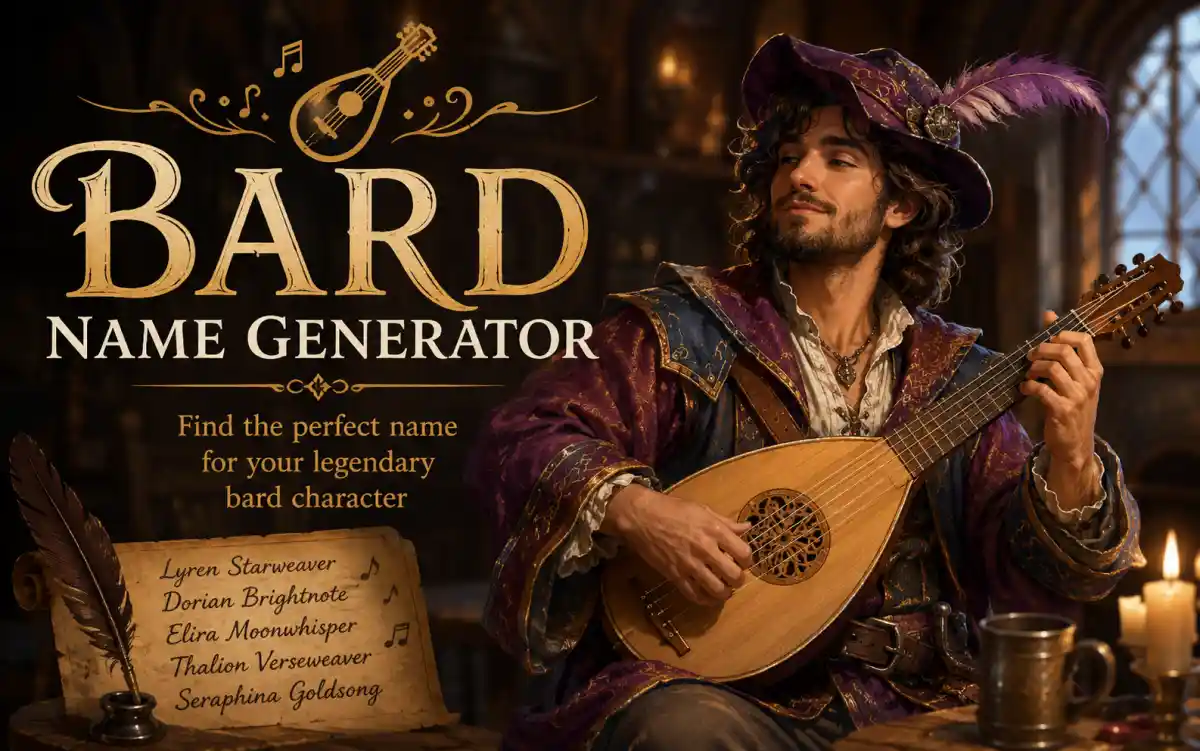
A bard name generator is a simple online tool that creates unique and imaginative names for bard characters. Instead of spending hours brainstorming, you can instantly generate dozens of ideas with just a click. These tools usually mix:
- Musical terms
- Fantasy-style wording
- Cultural inspirations
- Creative word combinations
The result? Names that feel lyrical, dramatic, and full of personality. Many generators are free to use and allow you to create unlimited names for different character types, whether male, female, or completely unique.

Why Bard Names Matter
A bard's name isn't just a label — it sets the tone for the entire character. In fantasy storytelling and games, names help define:
- Personality
- Background
- Style of performance
- Reputation
A well-crafted bard name can instantly make your character more memorable. Think of it like branding — the right name sticks.
Traditionally, bardic names have even been used as artistic identities or pseudonyms for poets and performers, showing how deeply connected names are to creative expression.
How to Use the Bard Name Generator
Using a bard name generator is simple and beginner-friendly:
- Open the generator tool
- Choose preferences (gender, tone, etc.)
- Click the generate button
- Browse through the results
- Pick your favorite or mix ideas
Most tools generate names instantly, so you can keep refreshing until something clicks.
Tips for Choosing the Perfect Bard Name
Not every generated name will feel right — and that's okay. Here's how to pick the best one:
1. Match the Personality
Is your bard funny, mysterious, or dramatic? The name should reflect that.
2. Keep It Memorable
Simple but unique names are easier to remember and more impactful.
3. Add Musical Flair
Bards are performers — names with musical elements feel more authentic.
4. Consider the World
A name should fit the setting (medieval, fantasy, magical, etc.).
5. Don't Be Afraid to Customize
You can always tweak generated names to make them your own.
Here are some example bard names to spark your creativity:
| Name | Pronunciation | Meaning |
|---|---|---|
| Calithran | /KAL-ih-thran/ | Voice of Silver |
| Bravaro | /brah-VAR-oh/ | Bold Performer |
| Melodryn | /MEL-oh-drin/ | Song Weaver |
| Thalorin | /THAL-or-in/ | Keeper of Tales |
| Valoryx | /VAL-or-ix/ | Heart of Courage |
| Dunwyck | /DUN-wik/ | Wandering Minstrel |
| Crescendo | /creh-SHEN-doh/ | Rising Storm |
| Lysandros | /ly-SAN-dros/ | Light Bringer |
| Fenharrow | /FEN-har-oh/ | Marsh Singer |
| Orvyn | /OR-vin/ | Golden Word |
These names follow common bard naming patterns — combining musical terms with fantasy-style words to create something memorable and expressive.
Funny Bard Names
If you prefer something more lighthearted, funny bard names can add personality and humor to your character:
- Lute Skywalker
- Sir Sing-A-Lot
- Banjo Baggins
- Chordy McChordface
- Melody Mischief
Funny names are especially popular in casual games or creative storytelling, making characters more entertaining and relatable.
| Name | Pronunciation | Meaning |
|---|---|---|
| Elowynn | /EL-oh-win/ | Starlit Melody |
| Seraphine | /SAIR-ah-feen/ | Heavenly Voice |
| Lyralei | /LEER-ah-lay/ | Song of the Forest |
| Thessara | /theh-SAR-ah/ | Enchanting Whisper |
| Cadenza | /kah-DEN-zah/ | Flourish of Sound |
| Vionelle | /vee-oh-NELL/ | String of Fate |
| Harmonia | /har-MOH-nee-ah/ | Balance of Worlds |
| Rhapsodi | /RAP-soh-dee/ | Wild Song |
| Delvinia | /del-VIN-ee-ah/ | Deep Resonance |
| Arietta | /ah-ree-ET-ah/ | Little Aria |
Best Bard Names
Looking for something more epic or serious? Here are some strong bard name ideas that feel magical, musical, and perfectly suited for fantasy worlds:
- Lyren Frostsong
- Sylas Melodion
- Elindra Whisperwind
- Varyn Skysong
- Seraphis Dawnchord
| Name | Pronunciation | Meaning |
|---|---|---|
| Versyn | /VER-sin/ | Born of Verse |
| Aelindor | /AY-lin-dor/ | Wind Chaser |
| Sonneth | /SON-eth/ | Echo of Light |
| Lyravel | /LEER-ah-vel/ | Wandering Song |
| Cantryn | /KAN-trin/ | Spell Singer |
| Revaire | /reh-VAIR/ | Dream Weaver |
| Quillen | /KWIL-en/ | Ink and Song |
| Rhythos | /RITH-os/ | Keeper of Rhythm |
| Tessavar | /TES-ah-var/ | Four Winds |
| Balladyn | /BAL-ah-din/ | Child of Ballads |
Features of a Good Bard Name Generator
A high-quality bard name generator should offer:
- Unlimited name generation
- Gender-based options
- Creative and unique outputs
- Easy-to-use interface
- Fast results
Some tools even allow customization so you can guide the style of names being generated.
Conclusion
A bard name generator is one of the easiest ways to bring your character to life. Instead of struggling to come up with ideas, you get instant inspiration tailored to the fantasy world.
Whether you want something funny, elegant, or legendary, the right bard name can completely transform your character and make them unforgettable. So go ahead — generate a few names, experiment, and find the one that truly sings.