What Is a Druid in D&D?
In Dungeons & Dragons, Druids are guardians of the natural world. Their power comes from forests, storms, rivers, beasts, and ancient primal magic rather than formal study or divine worship. Unlike Wizards who learn magic through books or Clerics who receive it from gods, Druids channel the living energy of nature itself.
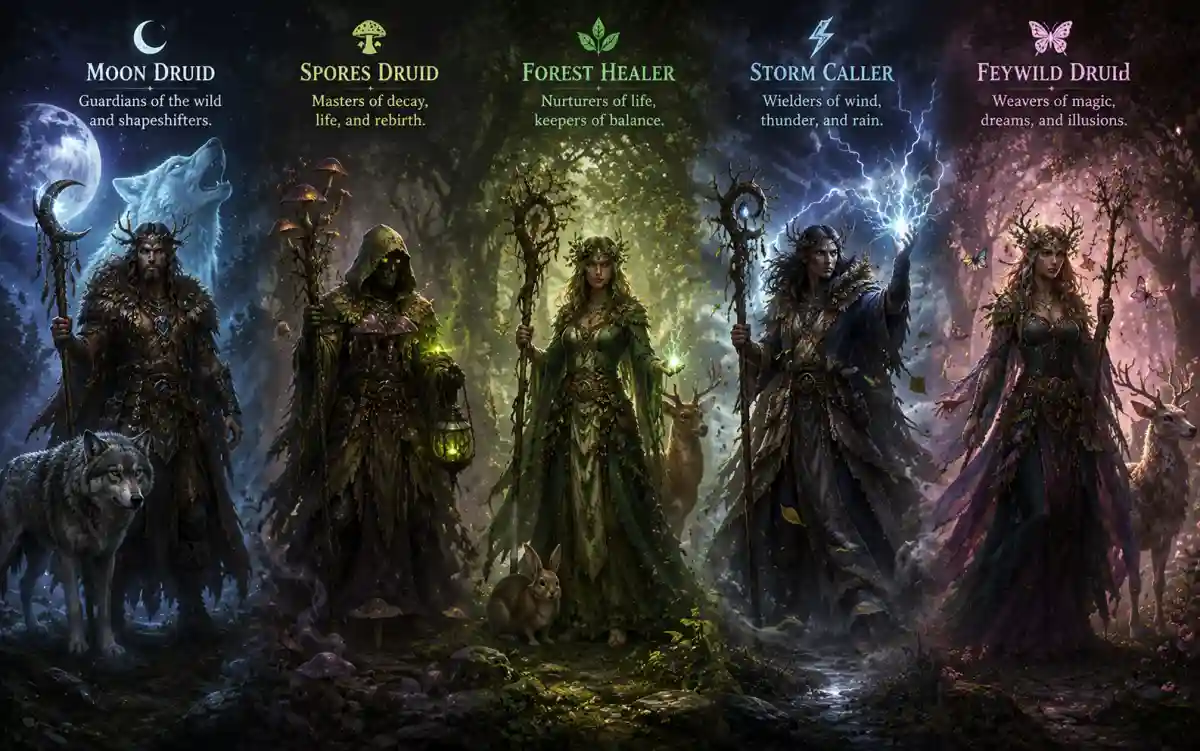
One of the reasons Druids remain one of the most popular D&D classes is their versatility. A Circle of the Moon Druid can transform into powerful animals and fight on the front lines, while a Circle of the Land Druid focuses on spellcasting and terrain-based magic. Circle of Spores Druids lean into decay, fungi, and the cycle of life and death, while Circle of Stars Druids draw power from constellations and cosmic forces.
That variety heavily influences naming styles. Some Druids carry calm, ancient names tied to forests and rivers. Others sound fierce and untamed, like predators or storms. The best druid names feel rooted in the natural world and hint at the character's bond with it.
A good druid name should sound like it belongs in a forgotten grove, whispered around a campfire, or carved into standing stones deep in the wilderness.
How Druid Names Actually Work
Druid naming traditions in fantasy settings are usually inspired by Celtic, Gaelic, Welsh, and old nature-based cultures. In many D&D worlds, Druids either inherit traditional cultural names or adopt entirely new names after joining a Circle.
For example, a Wood Elf Druid might begin life with a typical Elvish birth name, then later earn a title tied to nature, animals, or the land they protect. A Druid who guards an ancient forest may become known as Thornwood or Mossgrove. Another who walks coastal cliffs might adopt a name inspired by tides, storms, or seabirds.
Many druid names follow a few common patterns:
- Nature-based compound names
- Animal-inspired names
- Celtic-style phonetics
- Terrain or weather references
- Mystical or elemental themes
The goal is immersion. A Druid's name should sound organic and timeless, not overly modern or urban.
Types of Druid Names
Druid names usually fall into several recognizable categories, and each creates a slightly different feeling for the character.
Nature-inspired names are the most iconic. These combine forests, plants, roots, flowers, rivers, or seasons into names that instantly feel grounded in the wilderness. Names like Thornwood, Fernwild, and Mossgrove work especially well for Druids connected to forests and natural balance.
Celtic-inspired names draw from Welsh and Gaelic sound patterns. These names often feel ancient, mystical, and spiritual. They fit Druids who carry old traditions or come from isolated tribal cultures. Names like Gwynvael or Cernalith have that older fantasy tone many players look for.
Animal-inspired names focus on the Druid's bond with beasts and Wild Shape abilities. Hawkenthorn, Ravenmoss, and Wolfbane suggest characters who spend more time with animals than people.
Elemental and weather-themed names work well for Druids tied to storms, mountains, fire, oceans, or seasonal magic. Names like Ashveil, Stormhollow, and Embervale sound powerful without losing that natural feel. Choosing the right category depends on the type of character you want to create.
Male Druid Names and Their Meanings
Male druid names often sound grounded, ancient, and resilient. They usually carry the feeling of old forests, weathered stone, or wandering protectors of the wild.
| Name | Pronunciation | Meaning |
|---|---|---|
| Thornwood | /THORN-wood/ | Guardian of the Thorn Forest |
| Brennach | /BREN-akh/ | Raven King |
| Oakenshade | /OH-ken-shayd/ | Shadow Beneath the Oak |
| Cernalith | /KER-nah-lith/ | Horned Stone |
| Mossgrove | /MOS-grohv/ | Keeper of the Moss Grove |
| Alderthorn | /AL-der-thorn/ | Alder Tree Warden |
| Hawkenthorn | /HAW-ken-thorn/ | Hawk of the Brambles |
| Dunmara | /DUN-mar-ah/ | Brown Sea Watcher |
| Wyldren | /WYLD-ren/ | Child of the Wild |
| Barkhollow | /BARK-hol-oh/ | Hollow of the Ancient Bark |
Names like Cernalith and Brennach lean heavily into Celtic fantasy traditions, while names such as Mossgrove and Barkhollow feel more tied to forests and wilderness settings. If your Druid protects sacred groves or ancient ruins, these styles fit naturally into most fantasy campaigns.
Female Druid Names and Their Meanings
Female druid names often combine elegance with untamed energy. The strongest ones sound beautiful without losing the sense that the character belongs to the wilderness.
| Name | Pronunciation | Meaning |
|---|---|---|
| Briarwen | /BREER-ah-wen/ | Fair One of the Briars |
| Ivyshael | /EYE-vee-shayl/ | Spirit of the Ivy |
| Elowynne | /EL-oh-win/ | Elm Tree Grace |
| Gwynvael | /GWIN-vayl/ | White Spirit of Wind |
| Fernshade | /FERN-shayd/ | Shadow of the Fern Glade |
| Ashenwillow | /ASH-en-wil-oh/ | Willow Born of Ash |
| Roselynth | /ROHZ-linth/ | Thorned Rose of the Valley |
| Moonpetal | /MOON-pet-al/ | Petal That Blooms by Moonlight |
| Ceridwyn | /KER-id-win/ | Blessed Song of the Cauldron |
| Willowmere | /WIL-oh-meer/ | Lake of the Willows |
Some names, like Ceridwyn and Gwynvael, feel ancient and mystical, while others like Moonpetal or Willowmere carry a softer fantasy tone perfect for Feywild-connected Druids or healers.
Gender-Neutral Druid Names
Nature itself is not limited by human categories, which is why gender-neutral druid names feel especially fitting in fantasy settings. These names focus more on landscape, weather, and natural imagery than identity.
| Name | Pronunciation | Meaning |
|---|---|---|
| Roothollow | /ROOT-hol-oh/ | Hollow Among the Roots |
| Ashveil | /ASH-vayl/ | Veiled in Ash |
| Stonelark | /STOHN-lark/ | Song of the Standing Stones |
| Fernwild | /FERN-wyld/ | Wild Among the Ferns |
| Duskbriar | /DUSK-breer/ | Briar at Twilight |
| Windthistle | /WIND-this-ul/ | Thistle Carried by Wind |
| Embervale | /EM-ber-vayl/ | Valley of Dying Embers |
| Ravenmoss | /RAY-ven-mos/ | Raven Perched on Moss |
| Lichenglow | /LY-ken-gloh/ | Glow of the Lichen |
| Stormhollow | /STORM-hol-oh/ | Hollow Shaped by Storms |
These names work especially well for Firbolgs, wandering hermits, fey-touched Druids, or characters whose identity is deeply tied to the natural world.
How to Pick the Right Druid Name
Picking the right druid name is easier when you think about your character's story rather than just the sound of the name.
Start with the Druid Circle. A Circle of the Moon Druid usually fits animal-inspired names like Hawkenthorn or Ravenmoss because Wild Shape is central to the character. Circle of the Land Druids often suit terrain-based names like Mossgrove or Stormhollow. Circle of Spores Druids lean toward darker names connected to decay, ash, fungus, and rebirth.
Next, think about environment. A mountain Druid should sound different from a swamp Druid or coastal Druid. Harsh northern climates may inspire stronger, rougher syllables, while forest or Feywild Druids may use softer and more melodic names.
You should also decide whether the name is inherited or earned. Some Druids keep their original cultural names, while others adopt a new identity after joining a Circle or completing a spiritual journey.
Most importantly, say the name out loud. The best fantasy names sound natural when spoken during gameplay or storytelling.
Druid Names in Baldur's Gate 3
Baldur's Gate 3 helped introduce Druids to a wider audience, especially through characters like Halsin, one of the game's most recognizable companions. His name is a good example of effective druid naming — short, grounded, earthy, and memorable.
The Druid class in BG3 includes several popular subclasses:
- Circle of the Moon
- Circle of the Land
- Circle of Spores
Each one creates a slightly different fantasy identity, and the right name can strengthen that roleplaying experience.
Wood Elves, Humans, and Half-Elves are common choices for Druids in BG3, though tabletop D&D players also frequently pair Druids with Firbolgs because of their strong connection to nature and fey lore.
Whether you're building a BG3 character, writing a fantasy novel, or preparing for a tabletop campaign, a strong druid name helps make the character instantly more believable.