What Makes a Great Fantasy Kingdom Name?
A memorable fantasy kingdom name does more than sound cool. It creates atmosphere.
Think about iconic fantasy realms like Gondor, Mordor, Westeros, or Cormyr. Even without context, those names already suggest culture, geography, and power. The best kingdom names feel like they belong to a world with history behind them.
Strong fantasy kingdom names usually share a few traits:
| Trait | Why It Matters |
|---|---|
| Easy to pronounce | Readers and players remember it faster |
| Distinctive sound | Helps the kingdom stand out in your world |
| Consistent tone | A dark empire should not sound whimsical |
| Cultural identity | Names should match the kingdom's people and history |
| Implied lore | Great names hint at stories before lore is revealed |
Harsh consonants often create warlike or brutal kingdoms, while flowing vowels tend to feel ancient, magical, or elegant. A kingdom called “Dreadmoor” creates a completely different image than “Aeloria.”
That's why a good kingdom name generator should feel intentional rather than random. The name should sound like it belongs on a fantasy map, not like random syllables stitched together.
How Kingdom Naming Works in Worldbuilding
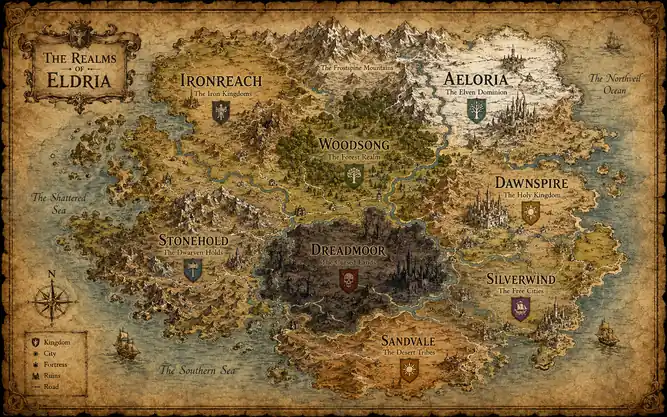
Professional fantasy writers and RPG creators rarely choose kingdom names randomly. Most fictional nations follow linguistic patterns tied to culture and geography.
Tolkien famously built entire languages before naming places like Gondor and Rohan. Modern fantasy authors use similar principles, even if they don't create full languages.
Most fantasy kingdom names fall into three broad styles:
1. Compound Kingdom Names
These combine meaningful words to instantly communicate identity. Examples: Thornhaven, Ironreach, Stormhold, Ravencrest. You immediately get a sense of the kingdom's environment or political identity.
2. Suffix-Based Kingdom Names
Certain endings naturally sound royal or territorial. Common fantasy suffixes include:
| Suffix | Typical Feel |
|---|---|
| -dor | Ancient land or empire |
| -heim | Norse-inspired kingdom — fits realms drawn from a Nord Name Generator |
| -mere | Lake or coastal realm |
| -garde | Fortified nation |
| -rath | Fortress or military power |
| -vale | Peaceful valley kingdom |
These endings help fantasy names feel more believable and structured.
3. Invented Fantasy Kingdom Names
These use phonetics to create culture and atmosphere without direct translation. Examples: Valdorath, Aelindorei, Nethyraxis, Thalorim. These names work especially well for original fantasy worlds because they feel unique while still sounding coherent.
Types of Kingdom Names
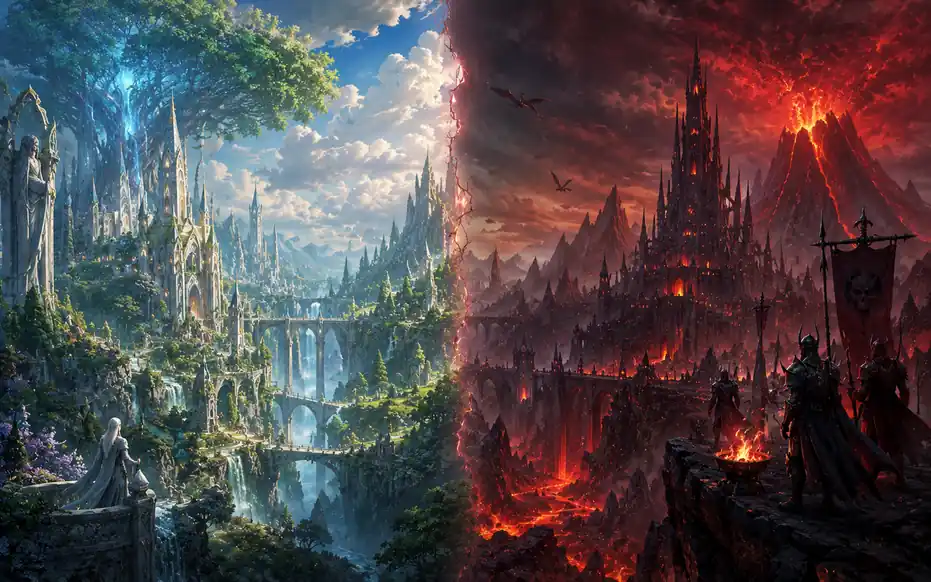
Different fantasy settings need different naming styles. A kingdom ruled by elves should sound completely different from a cursed undead empire.
Below are the main kingdom naming styles used in fantasy worldbuilding.
Medieval Kingdom Names
Medieval kingdom names work best for human civilizations, feudal realms, knightly orders, and classic fantasy settings inspired by European history. These names usually feature strong consonants, grounded phonetics, castle-inspired imagery, and military or noble themes. They fit naturally alongside the feudal High Rock provinces that produce Breton knights and battlemages.
| Name | Pronunciation | Meaning |
|---|---|---|
| Valdorath | /VAL-doh-rath/ | Fortress of Valor |
| Thornhaven | /THORN-hay-ven/ | Refuge of Thorns |
| Kingshollow | /KINGS-hol-oh/ | Valley of Kings |
| Ironmarch | /EYE-urn-march/ | Iron Borderlands |
| Stormveil | /STORM-vale/ | Veil of Storms |
| Aldenmere | /AL-den-meer/ | Old Lake Realm |
| Ravencourt | /RAY-ven-kort/ | Court of Ravens |
| Dunbarrow | /DUN-bar-oh/ | Hill Fortress |
| Greyspire | /GRAY-spyre/ | Tower of Ashes |
| Wyrmstead | /WURM-sted/ | Dragon Settlement |
These names fit naturally into D&D campaigns, low fantasy novels, and strategy games.
Why Medieval Names Work So Well
Medieval-style names feel familiar enough to remember while still sounding fantastical. They instantly suggest castles, banners, royal dynasties, border wars, and feudal politics. If your kingdom has knights, monarchs, guilds, or ancient fortresses, this style usually works best.
| Kingdom Name | Meaning |
|---|---|
| Ironmarch | Militarized frontier kingdom |
| Kingshollow | Ancient royal territory |
| Stormveil | Kingdom hidden behind mountains or storms |
| Thornhaven | Defensive refuge surrounded by wilderness |
| Blackmere | Dark lake-region kingdom |
Elvish Kingdom Names
Elvish kingdoms usually sound elegant, ancient, magical, and melodic. These names often use soft consonants, flowing vowels, lyrical syllables, and Tolkien-inspired phonetics.
| Name | Pronunciation | Meaning |
|---|---|---|
| Aelindorei | /ay-lin-DOR-ay/ | Land of Starlit Trees |
| Thalassyr | /thah-LAS-eer/ | Sea of Silver Light |
| Celestria | /seh-LES-tree-ah/ | Realm of Heavens |
| Luminaere | /loo-min-AIR/ | Glowing Twilight |
| Sylvandell | /SIL-van-del/ | Forest of Whispers |
| Elarionth | /el-AR-ee-onth/ | Crown of the Dawn |
| Mythrindal | /MITH-rin-dal/ | Valley of Myth |
| Vaelithor | /vay-LITH-or/ | Shining Sanctuary |
| Iseldwyn | /ih-SEL-dwin/ | Isle of Moonlight |
| Faerundiel | /fay-RUN-dee-el/ | Eternal Fey Court |
Elvish names work perfectly for forest kingdoms, immortal civilizations, magical realms, celestial empires, and fey territories.
Common Features of Elvish Kingdom Names
| Element | Effect |
|---|---|
| “ae” sounds | Creates ethereal tone |
| Long vowels | Adds elegance |
| Soft consonants | Makes names feel ancient |
| Musical rhythm | Improves memorability |
These names feel less aggressive and more timeless compared to medieval kingdoms.
If your world includes elves, fae courts, magical academies, or nature-focused civilizations, this naming style fits naturally.
Dark Kingdom Names
Dark kingdom names are designed for evil empires, cursed realms, necromancer kingdoms, demon territories, and shadow civilizations. These names rely heavily on harsh consonants, guttural sounds, intimidating syllables, and ominous imagery — fitting realms besieged by creatures you might find in a Monster Name Generator.
| Name | Pronunciation | Meaning |
|---|---|---|
| Vorgrath | /VOR-grath/ | Realm of Devourers |
| Dreadholme | /DRED-holm/ | Home of Dread |
| Nethyraxis | /neth-ir-AX-is/ | Axis of the Abyss |
| Malgrimor | /MAL-grih-mor/ | Dark Death Crown |
| Ashendral | /ASH-en-dral/ | Kingdom of Cinders |
| Blightmoor | /BLYT-moor/ | Plagued Marshlands |
| Kharvuul | /KAR-vool/ | Blood Throne |
| Shadowmere | /SHAD-oh-meer/ | Lake of Shadows |
| Thrakgorim | /THRAK-gor-im/ | Iron Skull Fortress |
| Vexanthor | /vex-AN-thor/ | Cursed Dominion |
A good dark kingdom name should sound threatening even before its lore is explained.
What Makes Dark Kingdom Names Effective?
Dark fantasy names often include heavy “gr,” “kr,” or “th” sounds, short aggressive syllables, and references to death, ash, shadow, or blood.
| Dark Kingdom Name | Tone |
|---|---|
| Dreadholme | Oppressive undead kingdom |
| Vorgrath | Brutal war empire |
| Ashenfall | Ruined cursed territory |
| Nethyraxis | Ancient demonic civilization |
| Skullreach | Violent wasteland kingdom |
These names work particularly well in grimdark fantasy, horror RPGs, and dark campaign settings.
Tips for Naming Your Kingdom
Even with a kingdom name generator, choosing the right name still matters. Here are some practical worldbuilding tips to make your fantasy realm feel more believable.
Match the Name to the Culture
A peaceful elven kingdom should not sound like a barbarian war empire. Think about race/species, climate, architecture, religion, and political structure. The kingdom name should reflect those elements.
Say the Name Out Loud
Some fantasy names look impressive but are difficult to pronounce during gameplay or reading. If players constantly stumble over the name, it weakens immersion. Good fantasy names should sound natural aloud, be memorable, and avoid excessive apostrophes or impossible consonant clusters.
Avoid Overcomplicated Names
Many beginner worldbuilders make names unnecessarily complex. Instead of Xhae'thoryn'vael, something like Valtheris is usually easier to remember while still sounding fantasy-inspired.
Keep Naming Consistent
Kingdoms from the same region should sound linguistically related. For example:
| Northern Kingdoms | Elven Realms |
|---|---|
| Frostmere | Aeloria |
| Ironvale | Syltheria |
| Stonegard | Elyndor |
This consistency makes your world feel larger and more believable.
Kingdom Names in D&D and Fantasy Fiction
Fantasy kingdom naming has shaped some of the most iconic settings in modern fiction.
In Dungeons & Dragons, kingdoms like Cormyr, Thay, Amn, and Solamnia all use distinct phonetic identities to create cultural separation.
Tolkien's kingdoms remain some of the strongest examples of fantasy naming — Gondor sounds noble and ancient, Mordor sounds harsh and corrupted, and Rohan sounds grounded and warrior-like.
Modern fantasy continues this tradition with Westeros, Alethkar, Nilfgaard, and Rivellon. Even anime isekai series like Re:Zero and Overlord follow the same intentional naming logic. These names work because they immediately establish tone and identity.
The best kingdom names feel like they existed long before the story began.