What Makes a Great Monster Name?
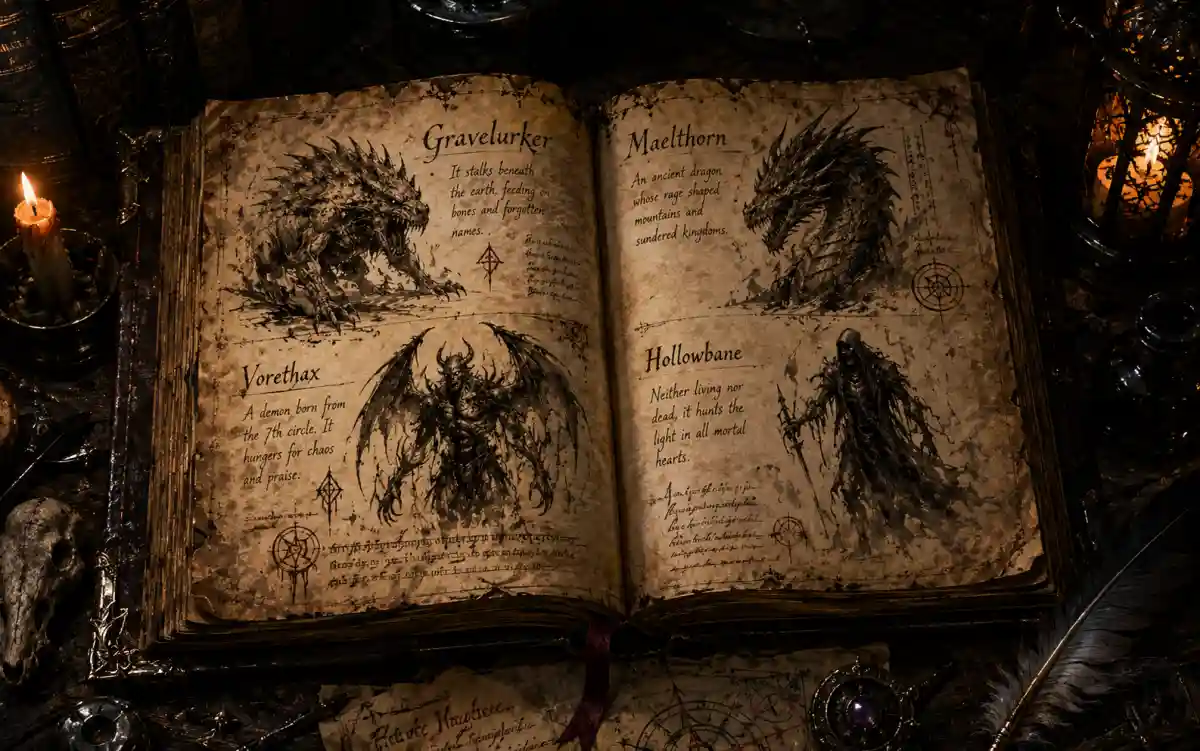
A strong monster name creates a reaction before the creature even appears. Players hear it once and immediately understand the vibe: dangerous, unnatural, ancient, violent, or completely alien.
The best monster names usually share a few traits: heavy consonants like K, X, GR, TH, or V, strong syllables that feel aggressive when spoken aloud, dark or primal imagery, and a balance between readability and mystery.
Names like Dreadmaw, Vorakthos, or Gravewhisper work because they sound tied to the creature's nature. You can almost imagine what they look like before seeing them.
Monster names also work differently from hero names. A protagonist's name needs personality and memorability. A monster's name needs impact. It should feel like something survivors whisper about around a campfire.
Fantasy has been using this formula for decades. Names like Smaug, Vecna, Tiamat, and Orcus became iconic because they're short, sharp, and instantly recognizable. Great monster names follow the same principle: easy to remember, hard to forget.
Monster Naming in D&D and Fantasy Worldbuilding
In tabletop RPGs like Dungeons & Dragons, monster names do a lot of storytelling work. Before players ever see a stat block, the name already sets expectations.
Consider what a name communicates instantly: Mind Flayer sounds psychic and horrifying. Displacer Beast sounds strange and predatory. Tarrasque sounds ancient and unstoppable.
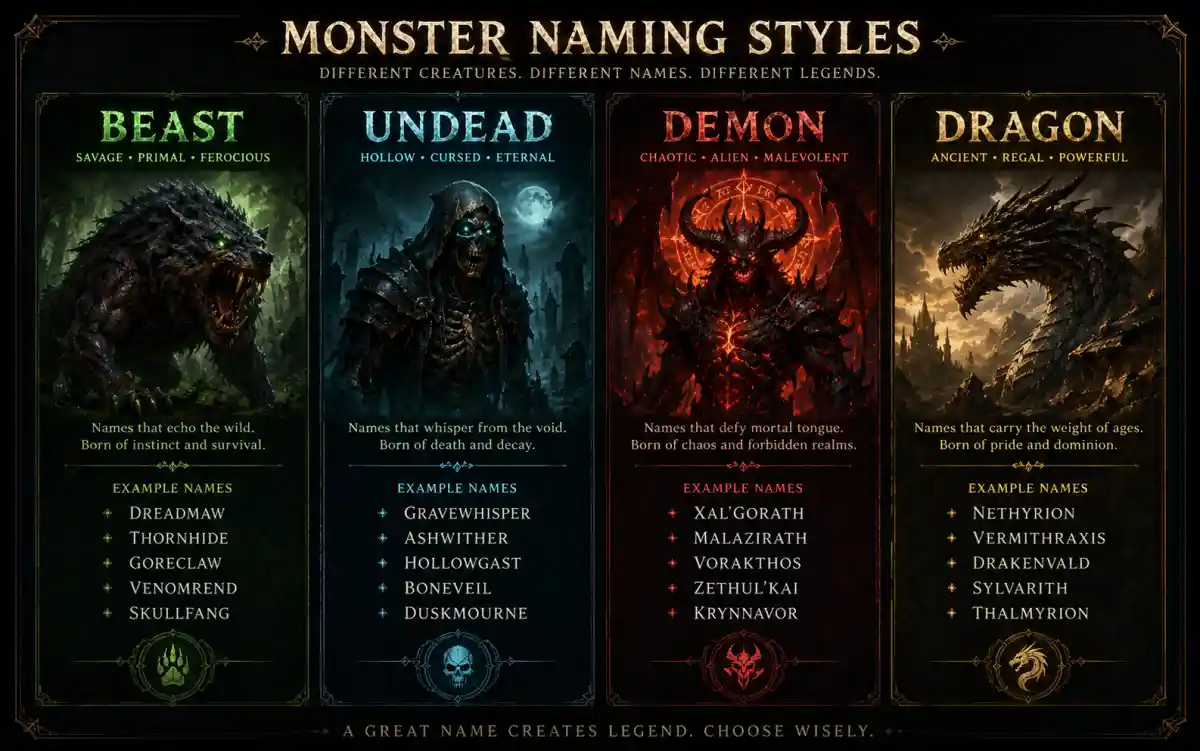
Good fantasy naming usually follows patterns based on creature type. Beasts use brutal compound words like Dreadfang or Gorehide. Undead use hollow, whispery sounds like Ashwither or Hollowgast. Demons use harsh alien syllables like Xal'gorath or Malazir. Dragons carry ancient regal tones like Nethyrion or Vermithraxis.
This matters even more in worldbuilding. Readers and players often judge a creature instantly based on its name. If the name sounds weak or generic, the monster loses impact. If it sounds ancient or threatening, people remember it. That's why many fantasy writers and dungeon masters rely on monster name generators when creating bosses, factions, cursed beasts, or legendary enemies. A well-built name immediately adds atmosphere to the setting.
Types of Monster Names
Different monsters need different naming styles. A swamp beast should not sound like an immortal dragon king. This generator separates names into four major categories to match different fantasy archetypes.
Beast Monster Names
Beast names are primal and aggressive. These names fit predators, mutated creatures, giant monsters, and wilderness horrors. They often combine violent imagery with physical traits.
| Name | Pronunciation | Meaning |
|---|---|---|
| Dreadmaw | /DRED-maw/ | Jaws of Terror |
| Goreclutch | /GOR-klutch/ | Blood Gripper |
| Thornback | /THORN-bak/ | Spined Predator |
| Skullcrusher | /SKUL-crush-er/ | Bone Breaker |
| Razorfang | /RAY-zor-fang/ | Blade-Toothed Hunter |
| Venomrend | /VEN-om-rend/ | Poison Tearer |
| Ashblight | /ASH-blyt/ | Scorched Corruption |
| Gloomfang | /GLOOM-fang/ | Shadow Biter |
| Ironhide | /EYE-urn-hyd/ | Impenetrable Beast |
| Bilehorn | /BYL-horn/ | Toxic Charger |
These names work especially well for forest predators, swamp monsters, giant creatures, tribal beasts, and dungeon creatures. Beast names usually sound like something frightened villagers created after barely surviving an encounter.
Undead Monster Names
Undead names lean into decay, silence, darkness, and emptiness. They should sound cold and unsettling rather than purely violent. Common traits include whisper-like sounds, hollow vowels, funeral imagery, and references to ash, graves, bones, or shadows.
| Name | Pronunciation | Meaning |
|---|---|---|
| Gravewhisper | /GRAYV-wis-per/ | Voice from the Tomb |
| Hollowgast | /HOL-oh-gast/ | Empty Spirit |
| Ashwither | /ASH-with-er/ | Crumbling Remains |
| Duskrot | /DUSK-rot/ | Twilight Decay |
| Bonesworn | /BOHN-sworn/ | Oath of the Dead |
| Wretchmire | /RECH-myr/ | Wretched Bog Spirit |
| Shadelock | /SHAYD-lok/ | Imprisoned Shadow |
| Corpselurk | /KORPS-lurk/ | Hidden Dead |
| Pallormane | /PAL-or-mayn/ | White-Haired Specter |
| Mournchill | /MORN-chil/ | Cold Grief |
These names fit liches, revenants, wraiths, necromancers, and haunted entities. A good undead name should feel cursed, ancient, and unnatural.
Demon Monster Names
Demon names should sound foreign to human speech. The best ones feel difficult to pronounce — almost wrong in a deliberate way. That's why demon names often use apostrophes, hard consonant clusters, long multi-syllable structures, and chaotic phonetics.
| Name | Pronunciation | Meaning |
|---|---|---|
| Vorakthos | /vor-AK-thos/ | Devourer of Wills |
| Malazirath | /mal-AZ-ih-rath/ | Crown of Malice |
| Xal'goreth | /ZAL-gor-eth/ | Keeper of Torment |
| Nethrizul | /NETH-rih-zul/ | Void Prince |
| Charnavex | /CHAR-nah-vex/ | Flesh Vexer |
| Ib'xareth | /IB-zar-eth/ | Whisper of the Abyss |
| Gorvazilon | /gor-VAZ-ih-lon/ | Tyrant of Blood |
| Skorrathul | /SKOR-ath-ul/ | Scorching Hatred |
| Drazenmok | /DRAZ-en-mok/ | Binder of Shadows |
| Fhulgrath | /FUL-grath/ | Wrath Incarnate |
Demon names work best for fiends, abyssal lords, infernal rulers, eldritch horrors, and otherworldly entities. In fantasy settings, demons usually come from different planes or dimensions, so their names should feel disconnected from ordinary language.
Dragon Monster Names
Dragon names carry weight and history. Unlike beasts or demons, dragons are usually intelligent creatures with centuries of power behind them. Dragon names tend to sound noble, ancient, flowing and elegant, and powerful without sounding chaotic.
| Name | Pronunciation | Meaning |
|---|---|---|
| Vermithraxis | /ver-mih-THRAX-is/ | Wyrm of Ruin |
| Nethyrion | /neh-THEER-ee-on/ | Lord of the Deep |
| Drakenvald | /DRAK-en-vald/ | Dragon Forest |
| Scorathane | /SKOR-ah-thayn/ | Flame Sovereign |
| Auranthor | /aw-RAN-thor/ | Golden Thunderer |
| Zyraphael | /ZY-rah-fay-el/ | Sky Serpent |
| Vordraxxis | /vor-DRAX-is/ | Storm Devourer |
| Kaelithrax | /KAY-lih-thrax/ | Ancient Scourge |
| Obsidrath | /ob-SID-rath/ | Black Glass Wyrm |
| Tyrannovex | /tih-RAN-oh-vex/ | Tyrant of Scales |
These names fit ancient wyrms, dragon gods, legendary bosses, high fantasy campaigns, and powerful intelligent creatures. Even evil dragons usually have names that command respect rather than pure fear.
How to Name Your Monster
Picking the right monster name depends on the role the creature plays in your story or campaign. Here are a few things that help.
Match the Name to the Monster's Personality. A stealthy predator needs a different style than a berserker monster. Nightfang feels fast and stealthy. Skullcrusher feels huge and brutal. The name should hint at how the creature behaves.
Think About Intelligence. Mindless creatures usually get names from terrified survivors. Intelligent monsters often have names from their own culture or language. That's why beasts often use descriptive compound names, while dragons and demons usually have longer fantasy-style names.
Say the Name Out Loud. This matters more than people realize. Some fantasy names look cool on paper but sound awkward when spoken during gameplay or dialogue. A good monster name should be easy enough to pronounce, sound memorable, and have rhythm and impact. If it sounds intimidating when spoken aloud, it's probably working.
Monster Names in Popular Media
Fantasy games, movies, and books have shaped how modern monster names sound. In Dungeons & Dragons, creatures like Beholders, Mind Flayers, and Demogorgon became iconic because their names feel unique and dangerous.
In The Lord of the Rings, names like Balrog and Smaug helped define fantasy monster naming for generations. Games like Dark Souls and Elden Ring also use monster names that blend mystery with brutality — names that feel ancient without becoming impossible to remember.
Even modern fantasy shows and RPG campaigns rely heavily on naming style because the name itself creates anticipation before the monster appears.